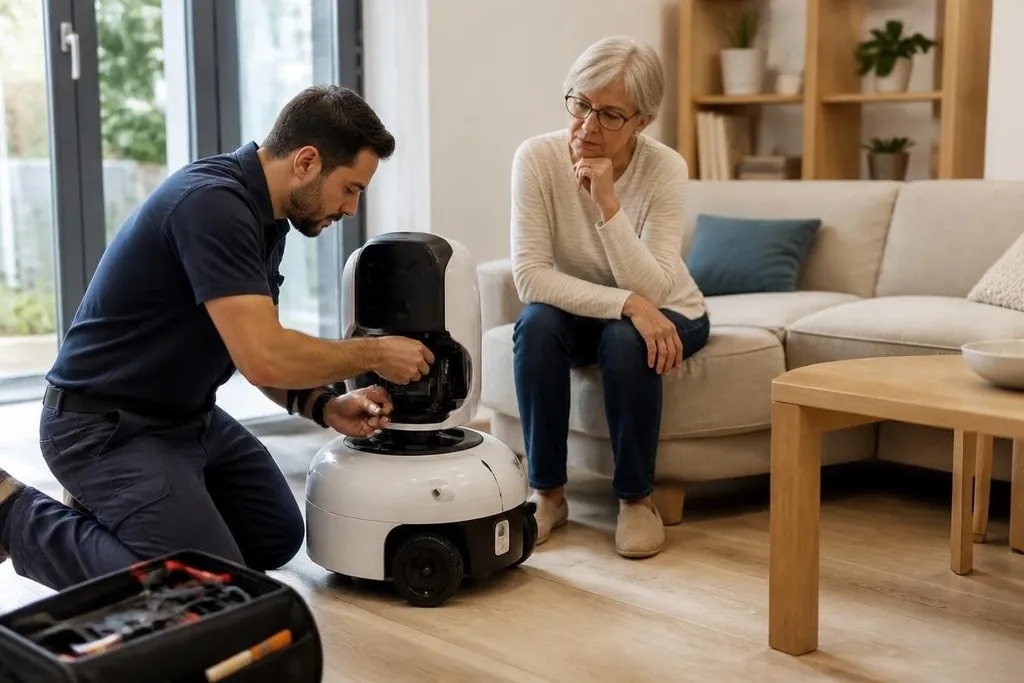
A home robot is sold as a machine, but the business around it starts before delivery and continues after the first software update.
The strongest openings may sit in installation, home mapping, repairs, safety checks, and help for people who don't want to become robot technicians.
- Robot sales create follow-on work
- Homes need setup that fits real rooms
- Repairs and software support can decide repeat purchases
The first sale is only the beginning
Moving through a home takes more than a box and a charging dock. It may need room maps, task settings, access rules, charging space, and a way to stop safely when a person enters its path.
That creates a service business for trained installers. A retailer, housing provider, or independent technician could visit the home, place the dock, check floor clearance, set safe operating zones, and show the owner how to use the controls.
The work matters because homes differ in ways a product page can't cover. Real rooms may have rugs, steps, narrow doorways, pets, glass doors, or furniture that changes position each day. Good setup reduces failed tasks and support calls.
The same service could work for older people or families caring for someone at home. They may value a working system more than a box of parts, especially when the robot connects with alerts, door sensors, or other home equipment.
Software creates a second business
Home robots will depend on software for maps, voice commands, task planning, and updates. Those functions need testing after a room changes, a router is replaced, or a new device joins the home network.
Companies could sell task packages for specific homes. A cleaning robot might need one set of routines for a small apartment and another for a house with several floors. A camera robot may need rules that limit where it records and when it sends alerts.
Privacy work will matter here. A service firm could help owners choose storage settings, delete old recordings, set user permissions, and check which outside services receive home data. The value comes from clear controls, not from collecting more information.
A home-robot company also needs to price support after the sale. A report at Robot24 can place a product beside its maker, software, and service plan. That record matters when the business case reaches repairs, where owners may need help long after delivery.
Repairs may decide who stays in the market
A home robot has motors, wheels or legs, batteries, cameras, wireless radios, and moving joints. Each part gives repair shops a possible source of work, provided makers sell replacement parts and publish safe repair steps.
The repair model could include battery replacement, wheel changes, sensor cleaning, software recovery, and checks after a fall. A local service network would also reduce the need to ship a large machine back to the maker.
This business has a clear limit. If a maker seals the battery, blocks diagnostics, or stops updates after a short period, independent repair becomes harder. Buyers will notice that cost before they buy a second robot.
I’d put repair access near the top of the buying decision, because a low purchase price means little if a small fault ends the robot’s useful life.
Trust is a product people can buy
Inside a home, the robot must behave in ways that owners can predict. People need to know when it records, where it sends data, what happens when it loses its connection, and how a person can stop it by hand.
That opens room for safety checks and home audits. A technician could test emergency stops, confirm camera zones, review user permissions, and check whether the robot can reach unsafe areas such as stairs or a child’s room.
Insurers, landlords, and care providers may also need records that show how a robot was installed and maintained. Any such market depends on clear rules from makers and regulators; no source material here shows which rules will apply.
A buying check for home robot services
Before paying for a robot or a service plan:
- Ask who installs the dock, maps the rooms, and sets safe zones.
- Check the battery replacement price and the repair route before purchase.
- Find out how long software updates and security fixes will continue.
- Confirm where video, audio, maps, and user data are stored.
- Test the manual stop control with every person who may use the robot.
The next business winner may sell fewer robots than the maker. It may be the company that keeps one working in a real home after the novelty of the first week has passed.